






2026 Jeep Grand Cherokee vs 2026 Toyota 4Runner: Which SUV Wins?
The 2026 Jeep Grand Cherokee produces 324 hp and tows up to 6,200 lbs, giving it a clear edge over the 4Runner's 278 hp and 6,000-lb tow rating. The Grand Cherokee pairs a turbocharged 4-cylinder with a more refined on-road character, while the 4Runner leans harder into body-on-frame off-road capability. This page breaks down every major spec difference and links to current Grand Cherokee inventory at ASA Auto Plaza of Jackson.
Research the 2026 Jeep Grand Cherokee
The Short Answer
The 2026 Grand Cherokee is the stronger choice for buyers who want a premium daily driver that can still handle trails and haul a boat on weekends. It rides better, puts out more power, and comes loaded with more interior technology from the mid trims up. The 2026 4Runner is the better pick for buyers who prioritize maximum ground clearance, a body-on-frame platform built for serious off-road work, and an optional hybrid powertrain. Know which category fits your life, and this comparison makes the decision straightforward.
Specs Head-to-Head
| Spec | 2026 Grand Cherokee | 2026 Toyota 4Runner |
|---|---|---|
| Engine | 2.0L Hurricane Turbo I-4 / 3.6L V6 | 2.4L i-FORCE Turbo I-4 / i-FORCE MAX Hybrid |
| Horsepower | 324 hp | 278 hp (i-FORCE); 326 hp (i-FORCE MAX) |
| Torque | 332 lb-ft | 317 lb-ft (i-FORCE); 465 lb-ft (i-FORCE MAX) |
| Transmission | 8-speed automatic | 8-speed automatic |
| Towing | 6,200 lbs | 6,000 lbs (i-FORCE); 5,800 lbs (i-FORCE MAX) |
| Cargo (behind 2nd row) | 37.7 cu ft | 48.4 cu ft |
| Max cargo | 70.8 cu ft | 90.2 cu ft |
| Ground clearance | 8.6 in | Up to 10.1 in (TRD Pro) |
| Seating | 5 | 5 (7 available) |
| EPA MPG (combined) | 23 mpg | 22 mpg (i-FORCE); 23 mpg (i-FORCE MAX) |
| Basic warranty | 3 yr / 36,000 mi | 3 yr / 36,000 mi |
| Powertrain warranty | 5 yr / 60,000 mi | 5 yr / 60,000 mi |
Performance and Powertrain
The Grand Cherokee's 2.0L Hurricane Turbo inline-4 (standard on Laredo Altitude and above) delivers 324 hp and 332 lb-ft of torque. The base Laredo and Laredo X use a 3.6L Pentastar V6 instead. Either way, the Grand Cherokee edges past the standard 4Runner's 278 hp figure. The 8-speed automatic in both vehicles provides smooth, confident upshifts for highway merging.
The 4Runner's standard i-FORCE 2.4L turbocharged inline-4 produces 317 lb-ft of torque, arriving at a low 1,700 rpm for strong pull from a stop. The available i-FORCE MAX hybrid variant bumps output to 326 hp and 465 lb-ft, and that torque figure is a significant real-world advantage when climbing steep grades or hauling heavy loads off-pavement. The tradeoff is that the i-FORCE MAX trims carry more curb weight, and TRD Pro towing drops to 5,800 lbs.
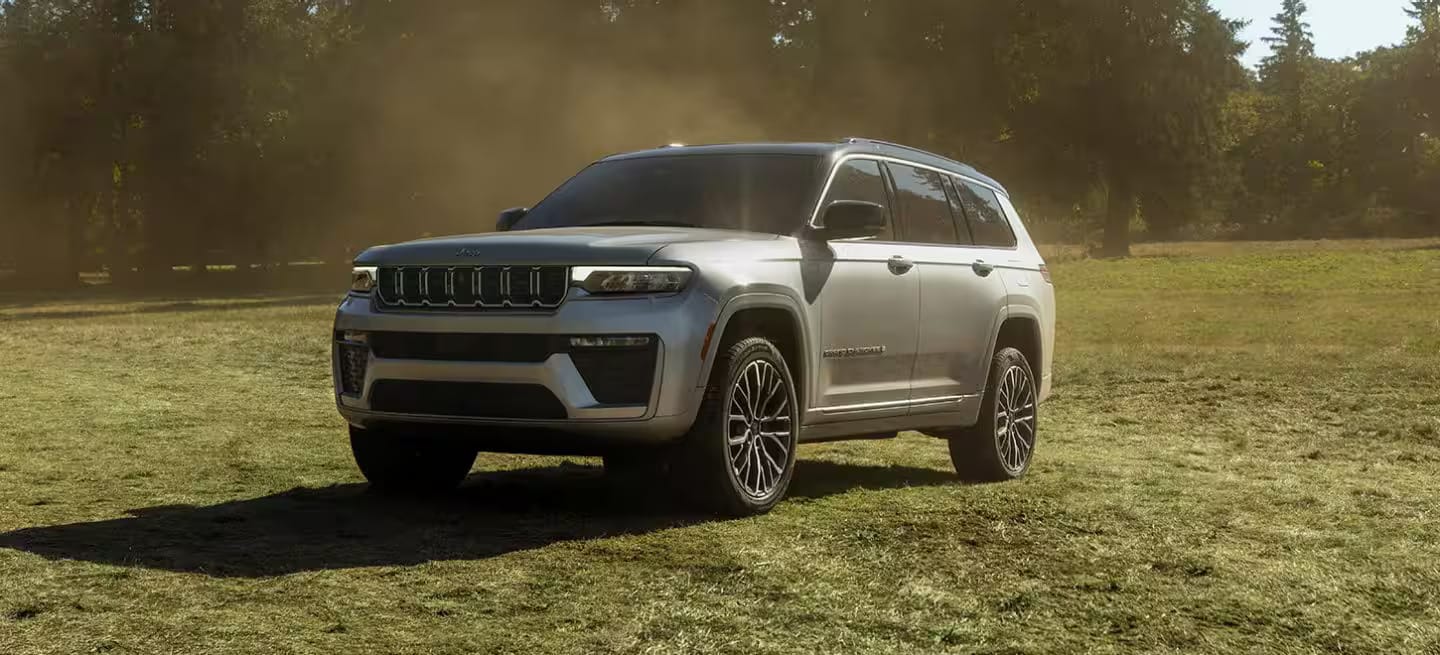
On towing, the Grand Cherokee's 6,200-lb rating beats the standard 4Runner's 6,000-lb limit by 200 lbs, and it beats the hybrid-equipped TRD Pro's 5,800-lb limit by 400 lbs.
The Grand Cherokee also features the Selec-Terrain Traction Management System with five drive modes: Auto, Sport, Rock, Snow, and Mud/Sand. The 4Runner counters with Multi-Terrain Select, Crawl Control, and Downhill Assist Control on 4WD trims, giving it a slight systematic advantage for technical trail driving.

Interior, Space, and Cargo
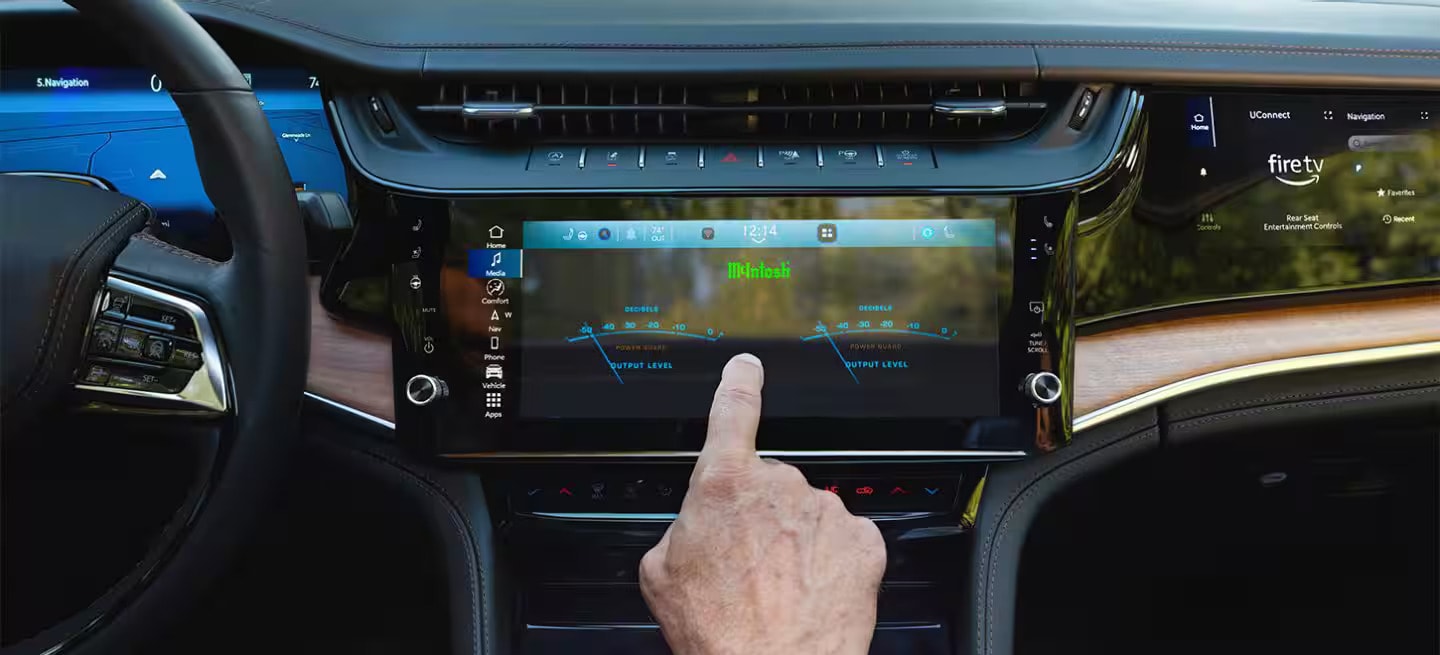
This is where the two vehicles diverge most sharply. The Grand Cherokee is built around a car-like unibody feel with genuine premium interior materials on Limited and above. Summit trim adds four-zone automatic climate control and an available 19-speaker McIntosh audio system. An available front-passenger touchscreen on the Summit is a feature the 4Runner does not offer.
The 4Runner uses body-on-frame construction, which trades some interior refinement for structural ruggedness. Interior space on certain key measurements is competitive. Cargo behind the second row is notably different: the 4Runner provides 48.4 cu ft versus the Grand Cherokee's 37.7 cu ft, and max cargo reaches 90.2 cu ft on the 4Runner against 70.8 cu ft in the Grand Cherokee. Buyers who haul bulky gear regularly will notice the 4Runner's cargo advantage.
The 4Runner also offers optional third-row seating (bringing capacity to 7), while the Grand Cherokee is a strict 5-passenger vehicle.
Ground clearance splits the two vehicles by application: the Grand Cherokee measures 8.6 inches, sufficient for the vast majority of trail and gravel road situations. The 4Runner's TRD Pro reaches 10.1 inches, which matters specifically for rock-crawling and extreme terrain.
Technology and Safety
Both vehicles include wireless Apple CarPlay and Android Auto as standard features. The Grand Cherokee steps ahead with a 12.3-inch Uconnect 5 NAV touchscreen on Laredo Altitude and above (Laredo and Laredo X use an 8.4-inch screen). The 4Runner offers an 8-inch display on base trims and a 14-inch screen on Premium and above trims.
The Grand Cherokee's available Hands-Free Active Driving Assist and available Quadra-Lift Air Suspension with Electronic Semiactive Damping are two features the 4Runner does not match. Dual-zone automatic climate control is standard across Grand Cherokee trims, while the 4Runner offers only single-zone automatic on its base SR5.
The 4Runner's safety suite, Toyota Safety Sense 3.0, adds several features the Grand Cherokee does not list in its standard package: Road Sign Recognition, Traffic Jam Assist, Proactive Driving Assist, and Front Cross-Traffic Alert. The Grand Cherokee's standard safety kit covers forward collision warning with pedestrian and bicyclist detection, automatic emergency braking, lane departure warning, adaptive cruise control with stop-and-go, blind spot monitors, rear cross-traffic alert, rear parking sensors with automatic braking, and lane-keep assist.
On the 4Runner's hybrid trims, an in-cabin and cargo-area AC power supply (up to 2,400W) provides genuine utility for worksites or remote camping. The Grand Cherokee does not offer this feature.
Value and Ownership
Both vehicles carry identical basic warranties: 3 years / 36,000 miles. Both also match on powertrain coverage at 5 years / 60,000 miles. Toyota additionally includes ToyotaCare, a no-cost maintenance plan covering initial factory-scheduled service intervals, which the Grand Cherokee does not include as standard.
The Grand Cherokee delivers more standard content at comparable trim positions, particularly in driver-assist technology and interior comfort. The 4Runner's TRD Off-Road and above trims bring hardware (Bilstein or FOX shocks, locking rear differential, steel rock rails) that the Grand Cherokee does not duplicate.
The Grand Cherokee's Selec-Terrain system and available Quadra-Lift air suspension allow drivers to adapt the SUV to varying terrain without committing to purpose-built off-road hardware. That versatility suits the majority of buyers who split time between highways, dirt roads, and occasional trails.
Which One Should You Buy?
Buy the 2026 Grand Cherokee if:
- You want more horsepower (324 hp) without moving to a hybrid system
- You prioritize a refined interior and premium tech features like the 12.3-inch Uconnect 5 touchscreen
- You tow frequently and need the full 6,200-lb capacity
- You want available air suspension that adapts the ride automatically
- You spend most of your time on pavement with occasional off-road use
Buy the 2026 Toyota 4Runner if:
- You want maximum cargo volume (90.2 cu ft) or the option for a third row
- You need 10.1 inches of ground clearance and purpose-built trail hardware
- You want a hybrid powertrain (i-FORCE MAX) for better fuel efficiency and massive torque
- You want an onboard AC power supply for remote worksites or camping
- You value Crawl Control and a locking rear differential for technical off-road scenarios
For the buyer who wants a capable, comfortable SUV for daily driving in Jackson, MN and surrounding areas, the Grand Cherokee's power, tech, and comfort package makes it the easier choice to live with every day.
See the 2026 Grand Cherokee at ASA Auto Plaza of Jackson
ASA Auto Plaza of Jackson carries the 2026 Jeep Grand Cherokee across a range of trims, from the Laredo to the Summit, with 4x2 and 4x4 configurations in stock. If the Grand Cherokee is the right fit based on this comparison, the next step is checking live inventory and scheduling a test drive.
Frequently Asked Questions
Does the 2026 Jeep Grand Cherokee tow more than the Toyota 4Runner?
Yes. The Grand Cherokee tows up to 6,200 lbs, compared to 6,000 lbs on standard i-FORCE 4Runner trims and 5,800 lbs on the TRD Pro with the i-FORCE MAX hybrid powertrain.
Which SUV has more cargo space, the Grand Cherokee or the 4Runner?
The 4Runner carries more cargo. It offers 48.4 cu ft behind the second row and up to 90.2 cu ft maximum, compared to 37.7 cu ft and 70.8 cu ft respectively in the Grand Cherokee.
Does the 2026 Grand Cherokee come with a touchscreen as standard?
Yes. The Laredo and Laredo X include an 8.4-inch touchscreen with Apple CarPlay and Android Auto. Laredo Altitude and above trim levels add the 12.3-inch Uconnect 5 NAV touchscreen.
Which vehicle has better ground clearance?
The 4Runner's TRD Pro reaches 10.1 inches of ground clearance. The Grand Cherokee measures 8.6 inches. For most buyers, 8.6 inches handles light to moderate off-road use without issue.
Does the Grand Cherokee offer a hybrid powertrain?
No. The 2026 Grand Cherokee is not available with a hybrid powertrain in the U.S. lineup. It uses either a 2.0L Hurricane Turbo inline-4 or a 3.6L Pentastar V6, both running on gasoline.
What safety features come standard on the Grand Cherokee?
Standard safety on the 2026 Grand Cherokee includes forward collision warning with pedestrian and bicyclist detection, automatic emergency braking, lane departure warning, adaptive cruise control with stop-and-go, blind spot monitors, rear cross-traffic alert, rear parking sensors with automatic braking, and lane-keep assist.
Can I see 2026 Grand Cherokee inventory near Jackson, MN?
Yes. ASA Auto Plaza of Jackson stocks the 2026 Grand Cherokee. Use the inventory link on this page to browse current trim availability and check in-stock options.